April 14, 2026 • podcast
Episode 3: Loggerhead Distillery
Listen on:

Colby Theisen and Chris Schmitt didn't plan to open a distillery. Chris got laid off from a software job, had a front yard full of oranges he always meant to ferment, and started building stills — first a pressure cooker, then bigger, then bigger still, until one stood 10 feet tall. He never did distill those oranges. Then Colby hired him, and for two years over lunch they talked about what it would look like to do this for real. The day Colby left that job, he asked: are we gonna do this? A week later, they had a property. Loggerhead Distillery was in business.

Today, Loggerhead sits in the middle of downtown Sanford's fast-rising craft district, turning out rum, vodka, gin, bourbon, single malt whiskey, and an award-winning apple pie moonshine — all made with Florida ingredients, all poured with a story behind them. The name? A nod to the loggerhead sea turtle, Florida's unofficial coastal symbol — and a cause the distillery backs with dollars, not just words. Every retail bottle sold puts a dollar toward sea turtle hospitals and coastal conservation through their Spirit of the Ocean project.

This is what two engineers do when they stop talking and start distilling.

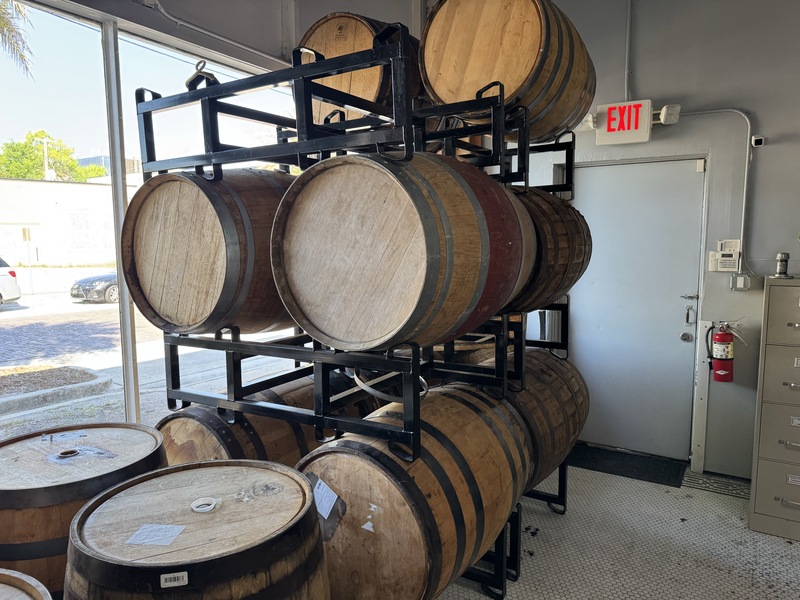
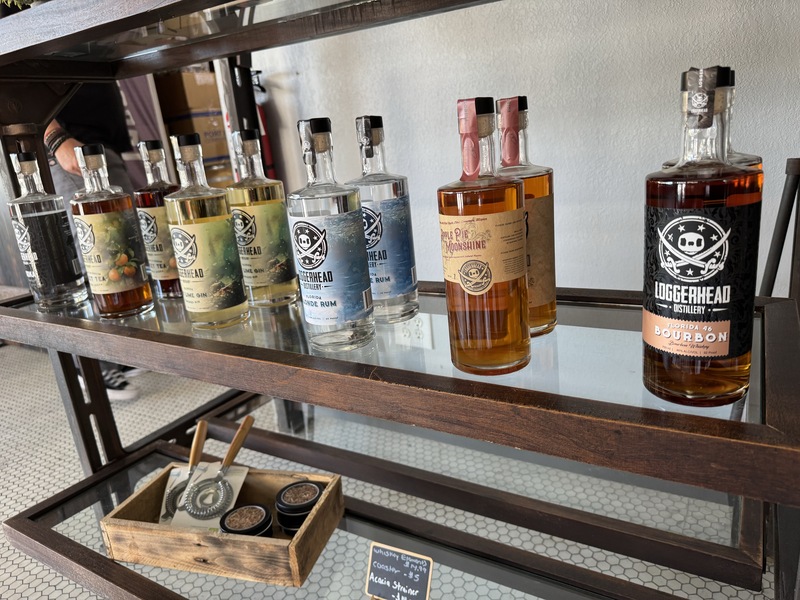
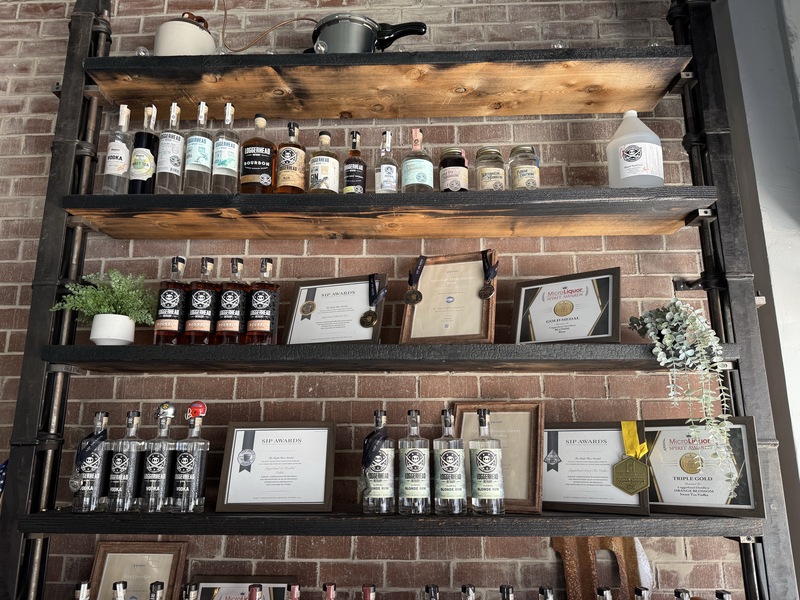
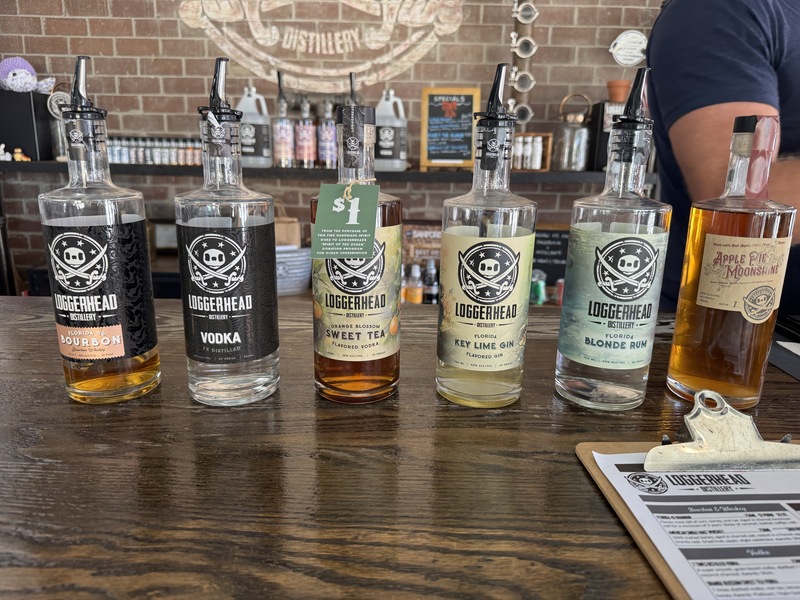
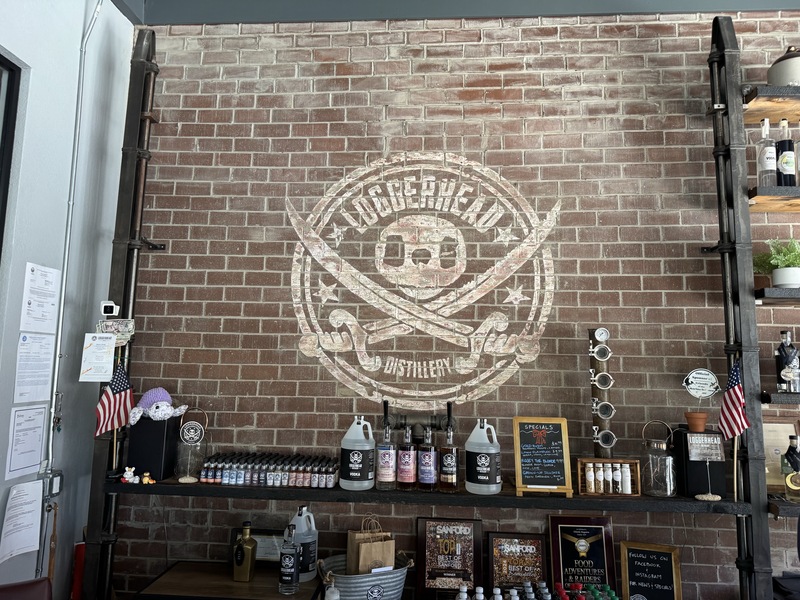
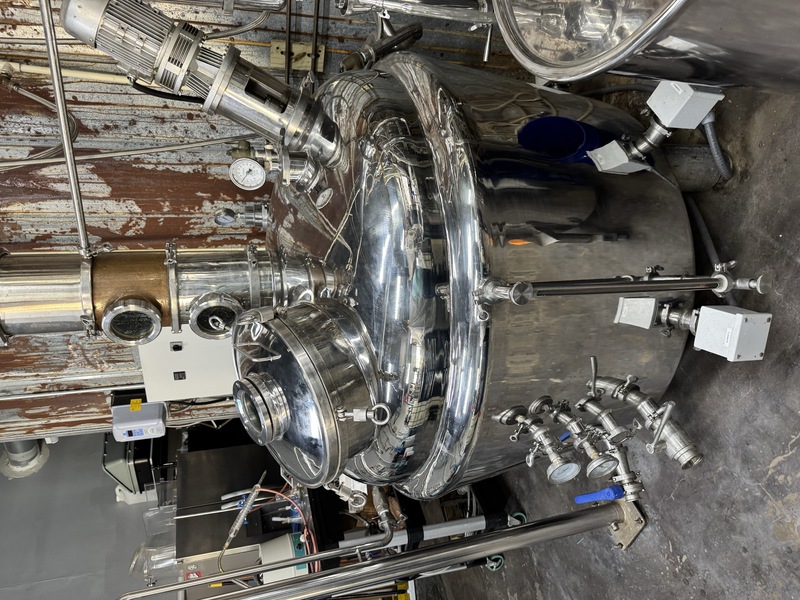
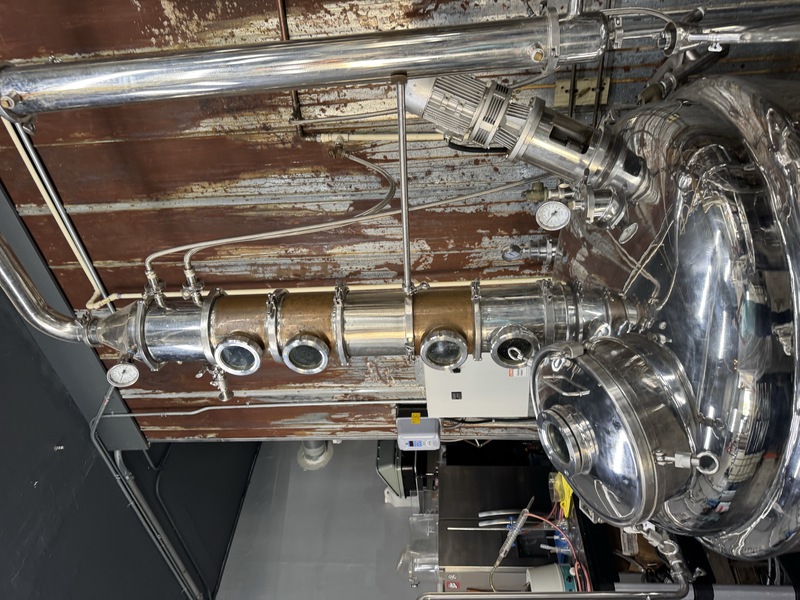
Loggerhead distillary barrels in front of the window Loggerhead distillery bottles on a shelf Loggerhead distillery display Loggerhead distillery lineup Loggerhead distillery logo Loggerhead distillery still closeup Loggerhead distillery still

Episode Transcript

Cal Evans: Hi, my name is Cal Evans, and this is Hearts and Tails. Hey, I'm here with Colby and Chris, and we are at the Loggerhead Distillery here in Sanford, Florida. Boy, this is a beautiful downtown. Thank you. And we're gonna, we're gonna talk a little bit, uh, about that a bit, but you guys have got a, a beautiful setup here, but you've got an interesting backstory.

So let's talk a little bit about what I like to call your origin story, because. Both of y'all are engineers. Mm-hmm. How does an engineer go? Hey, let's make moonshine?

Colby Theisen: Uh, I think mine and Chris's story is gonna be a little different. You wanna take this one?

Chris Schmitt: Sure. So I'm a software engineer and, um, I was working for a pretty big company and they laid me off and I had, uh, what do you call that? Uh, they paid me, still slipped my mind. Um, and I needed something to do. And I had some oranges out in the backyard that were, or in the front yard that were always falling. I thought, oh man, that would be cool to ferment those and, and distill them. And so I, like, I do, I got into, and I made a bunch of stills and I started very small with like a little pressure cooker. And then I got bigger and then I got bigger and then eventually had one that was about, uh, stood about 10 foot tall. Mm-hmm. And, um, I never distilled those oranges. I had distilled a lot of stuff, but I never distilled those oranges and that haunts me to this day. We'll get to 'em. And then, um, after my time run up and I needed to get a new job, I actually, uh, was hired by Colby at the company he worked for at the time. And, um, we would go to lunch with the crew every, almost every day. And we talked about my distilling and um. I said, man, he said, I'd really like to open a distillery. I said, yeah, I would too. One day. And we talked about it for, I think went on for like two years. Hmm. And then, uh, Colby had to leave the company and, um, he said, are we gonna do this? And I said, okay. And I think it was like a week later, he found this property and, um, gotta move fast. We, we were, we were in business. Uh, as far as starting the process.

Colby Theisen: That's it. That's how it happened.

Cal Evans: Wow. That is excellent. Hey, after we finish this, we gotta talk because professionally I am, they call me a software engineer. I'm, I'm not sure how much these days I teach more than anything else, but, uh, we, we need to sit down and talk 'cause we probably got some same horror stories. Um, well this is, this is a beautiful facility. Most people can't see it, but there's a window right back there. If you're sitting here at the bar, you can watch 'em distill and label and all that kind of fun stuff. And, um, I, I was still in, um, Colby, there's, you, you said there's an apartment above, and if I lived in an apartment above a distillery, I would just have my checks forwarded here, you know, because I, I would probably live here.

Um, so Loggerhead. Now of course, to me, um, as a retired, um, scuba instructor, loggerhead turtles are just precious to us. When we out in West Palm, we'd go out and if we didn't see three or four turtles on every dime, we almost felt like we owed people their money back because, you know, there's turtles everywhere, but we're a little bit inland up here. Tell us about the name, where'd the name come from, and, um, why'd y'all choose that?

Colby Theisen: Uh, well, when you grow up here in Florida, Chris grew up over on the coast and, uh, you know, from central Florida you have very easy access to either coast. Mm-hmm. Um, you grow up here, you surf, you boat, you fish. And the same thing if you don't see, if you're out, uh, surfing and you don't see a turtle, or you go out on a boat fishing and you don't see two or three of them. It's like, your day's not complete. Mm-hmm. So, um, I think it was one of the first names that we threw out. It was, I've, I've had companies where we arm wrestled, we argued, we put names in a hat, and we vetoed and argued. This one was the very first name that we threw out. Chris and I agreed immediately. It, that's it. Um, Florida's the, the largest nesting ground of Loggerhead sea turtles. Uh, it just kind of meant Florida to us. It was symbolic of Florida to us. So. Um, that's why we, we named it, uh, Loggerhead Distillery.

Cal Evans: Well, that is cool. Yeah. When we were, especially during mating season, I had a class out on the boat and we counted 14 on one dive. And I'm like, wow. But I just love the fact that, um, you, y'all have leaned into that with your labels and everything. Um, the logo behind us, um, is just, just. Very cool.

Let's talk about one of your products. Now, we don't do product pitches here, but this one's interesting. The Blonde Rum. Um, it's got four ingredients. If I'm reading this label right, it's got, um, Florida molasses. And I love the fact that y'all are using local ingredients — water, yeast. And did I read that right? Love? That is correct. Tell us about that.

Colby Theisen: That is one of the ingredients we list. Um. I think it comes down to, uh, for us at least, just the, the pride of making a product mm-hmm. That people enjoy, that people can take home and enjoy. Sometimes, you know, when you're an engineer, you work on a project, um, you can go a year, you can go more than that, you know? Yeah. You, you just mentioned and you, and it's hard to point to something and say, I made that today. Mm-hmm. With this, it's a little bit different. You do have a lot of art and a lot of science. Um. And they come together with a product that people can take home. And at the end of the day, you can say, I made that today.

Cal Evans: That is very cool. I like, I I, I was telling you earlier, um, I, I like most craft spirits, but rum is always my favorite. So I, I'm looking forward to the tasting so that, um, I, I can get a, a taste of that.

Colby Theisen: I think you're gonna like it.

Cal Evans: You, you make rum and a lot of people down here in Florida make, um, make rum 'cause we've got so much sugar. Sure. But, um, you guys have got a vodka, a gin, a bourbon, and a single malt whiskey. Now that's unusual from the craft distilleries that I've taken the tours and I've been on about 20 tours. Most people have one, maybe two solid products that they'll push. Was it just that you kept finding things that you wanted to make or did you, you know, were you just looking to make some variety?

Colby Theisen: Uh, yes. A little of all of that. I think we were, we were trying to fill that hole in Chris's heart that he never fermented those oranges. Um, and so we did what, uh. What we liked, we did what people were asking for. Um, and we wanted to have a variety of different things to, to give to different people because different people have different, you know, taste profiles and things like that, that they enjoy. Mm-hmm. Um, if you make just rum, but people don't like rum, you know, they might not come visit you, but when you, when you give 'em a variety, um, they tend to, they tend to like it so. That's what we chased.

Cal Evans: Well, very cool. Yeah, I I, I get the, you know, if they don't like rum, they don't come visit you. And I got a brother-in-law that doesn't like rum. I'm perfectly happy with that.

So, you know, now you've got an apple pie, moonshine, and I, you know, moonshine, as much as we get it down here in Florida, moonshine never been one of my favorites. But done right, it can be very good. And apparently y'all have figured out how to do it right, because not only did you, um, your apple pie moonshine win an award, you sold out of it immediately after that. People liked it that much. Talk to us about your apple pie moonshine. What makes it so great?

Colby Theisen: My opinion, um, we use, uh, real apple cider. Mm-hmm. That's one of the things. Um, it's a little sweeter. It's a little lower in proof. Um, and that, that tends to hit, uh, a taste profile that, that people seem to enjoy. Mm-hmm. So sometimes when you're, when you want to try moonshine or you get a moonshine, they're looking to just blow your face off. And that's the novelty of some moonshines. Yeah. But if you want one that you can like, sit around the campfire or something and sip on at night. Mm-hmm. Um, this is the one for you. So it has, uh, it did sell out and we actually decided at one point we were gonna make it, uh, seasonal. Oh. And that was a mistake because people. Everybody who came in here, why don't you have the apple pie moonshine? Why don't you have the apple pie moonshine? So we decided to move it back to full time. It is a regular staple now. Yes, sir.

Cal Evans: That is very cool. Now, I always love to ask this question. Tell me about the batch that went wrong because everybody's got one.

Chris Schmitt: Well, it's, uh, we want to do a, uh, Florida rye. Um, oh and, um, completely in-house here. Uh, uh, some of our single malts we send, we do a project with the local breweries to actually do the wash. Oh, okay. Sometimes so, but the rye, we were doing completely here and we were using a, um, unorthodox method to making it using a screw press to separate out. And unfortunately when we got it ground, we got it ground too fine. And, um, it, uh, rye is very difficult to work with and having it ground fine. Um, so I'm in the middle of this batch all by myself and I can't get anything out of the screw press. I've got 150 gallons to go through and there was nothing I could do. And I have made an ungodly amount of mess in the process. And um, I think it was on a Saturday and I can't remember, did you come in that day or was...

Colby Theisen: You might've called me in a panic.

Chris Schmitt: I think I did call you. And, uh, uh, we shut it down and, uh, reset. But that day, uh, was. It was a hard lesson, uh, to learn. Uh, and, uh, but we got through that rye and we have it in a barrel. And, uh, I'm not sure exactly when we're gonna release it, but, you know, it's getting close. Really? It's getting close. Getting close.

Colby Theisen: It's a Florida black rye. Ooh. So that one is a, is a local, uh, grain as well.

Cal Evans: Nice. Hey, now we're sitting here in this beautiful bar and, um, I, I can imagine that tonight about seven or eight o'clock, this is gonna be a hopping joint. Um, but it wasn't always this way. The laws in Florida, um, have been slowly changing. Um, originally we couldn't even make moonshine, um, and now you, you can not only sell it, but you can sell cocktails and you can show people how to use your product. Um, how does, how does that work into your business and how does that make you feel to be able to show people or to showcase your product in context?

Colby Theisen: It, it was a fantastic change. I, um, when I travel, I try to go to small craft distilleries. I try to find one in the area and I'll, and I'll go see 'em. And there, there was a, Oregon, I think was one, uh, maybe Colorado was another one. I went and I expected kind of the same thing, just, just do a sampling and then maybe buy a bottle and go home. Mm-hmm. And they're serving cocktails. And I was like, why, why isn't Florida doing this? And, uh, thankfully they, they did make that change, uh, during COVID. Uh, we're allowed to make cocktails now and before we kind of, uh, gave samples to our customers. And when they taste it straight, of course it's gonna be different than when they put it into a cocktail. So you give 'em the spirit and you kind of hope they like it enough to buy a bottle, right? And spread the word. Uh, now that we can make cocktails, we can kind of show them and we try to, we intentionally try to keep our cocktails, um. Not basic, but it's simple enough to make at home. Yeah. Like three ingredients, maybe four. And that's about it. Mm-hmm. Um, but we're not using like grains of smoked, grains of paradise and things like that in our cocktails. Um, but we want to show them what they could do at home and what it would taste like at home. And we find that, uh, in addition to like showcasing, uh, that spirit in a cocktail, that uh, people actually respond a lot better. Uh, and they're like, yeah, I want to take that home and make this cocktail. They're asking for our cocktail recipes to go home with. So it really, really has helped.

Cal Evans: Yeah, I see the, the cocktail cards over on the, the window. Um, what's, what's your favorite one that you make?

Colby Theisen: My favorite cocktail that we make? Mm-hmm. Uh, we, we, I try to rotate, uh, at least two, maybe three cocktails, um, every quarter or so. Mm-hmm. In tune with some of the holidays, like we just had some specialties for, um. St. Patrick's Day. Mm-hmm. And Valentine's Day before that. But my favorite that we keep on the menu is probably our, what, what I call the GTR, which is a gin and tonic with rosemary. So it's our, it's our key lime gin, a little bit of lemon juice, tonic and elderflower simple syrup. Oh. Garnished with some rosemary.

Cal Evans: I bet. That's awesome. I, I, I love. Like you said, simple cocktails because I was watching this, um, video online of this one, and they took a syrup and they mashed, um, raspberries in it and then they poured bourbon in it. And it was one of the major brands, but not one of the brands I drink. And then they smoke it. I'm like, yes, if you gotta do that to get people to drink your bourbon, there may be something wrong with your bourbon. And then they topped it with Coke. I saw this one. It's like, a nice simple cocktail is just better.

Um, and one of my other projects is, um, teaching people how to be home bartenders. I've got a whole encyclopedia of that. And, you know, it just — that is becoming an art form, you know. I, I love being able to craft a cocktail. When Kathy, my wife, um, when we are sitting there watching TV, I love having like a new cocktail once a month and showing her something new. We're a split family — she does not like rum. So, you know, but we're, we're getting through this.

Colby Theisen: That's okay. That's okay. It's all yours.

Cal Evans: So let's talk a little bit about, um, the fact that you, this is more than just the distillery. We talked about the, um, the turtles. You have the Spirit of the Ocean project. Mm-hmm. Tell us a little bit about that — not only what it is, but why it exists.

Colby Theisen: Well, it goes back to, uh, the fact that we, uh, see Loggerhead sea turtles kind of as a, you know, a thumbprint of what Florida is, part of what Florida is. Um, and we decided early on that we wanted to donate to, uh, sea turtle hospitals, coastal conservation, uh, beach cleanup, those types of causes. So we found, um, the Marine Science Center in — UCF. Mm-hmm. And, um, the Brevard Zoo, that, that are part of the group that we, that we donate to. So we donate a dollar from every retail bottle purchase. Mm-hmm. Um, to those, to those causes.

Cal Evans: Very cool. You want to add to it?

Chris Schmitt: Much like our name and how easily we came up with that name. I think, uh, giving back to the conservation thing was like an instant. Yeah, that's not even a question. We're gonna do that. And, uh, I've always felt really positive about that.

Cal Evans: Well, I, I, I love that. And, um, I, I've talked to a couple of different distilleries that contribute back to their community and obviously, um, you're part of the community here because you're part of the downtown experience, but I love the fact that, um, you're giving back beyond that. And of course, as, as somebody who has spent many an hour in the ocean, I, I appreciate the fact that y'all are helping with the turtles. Um, I used to have a friend who would work the beaches during, um, nesting season. Mm-hmm. And, you know, mark the beaches because, um, down there in Palm Beach, they're very serious about the nesting. And, uh, you, once those are marked, you don't go near 'em, you know.

And we've got the Loggerhead Marine Center and we've been with them on one of their, um, hatchings. So they'll send people out and when they find a turtle hatching, we're sitting in the Loggerhead Marine Center waiting for somebody to radio in. We found one, and then we get to watch them, um, hatch and crawl out. And it was, it was awesome.

Colby Theisen: Awesome. UCF took us out once, uh, to see the nesting, um, over in, um, Cocoa? Yeah, I think it was. Oh, nice. Yeah. And I was, I was amazed. The same thing. We're sitting around there, we're waiting, you know, it's midnight, it's one o'clock, and you know, eventually someone radios in and says, okay, we got one. And so we all head out to, you know, kind of take a look. Yeah. And within half an hour there were probably 30 crawling up on the beach. It was amazing.

Cal Evans: That is wild. Yeah. We were out the last time I was out at the beach. Um, we, we saw tracks of one that had crawled up and it's just, it's, it's amazing. These things are so big and, and so graceful when you see 'em in the water just gliding along. Mm-hmm. You know? It is awesome. Well, I, I appreciate the fact that y'all do that. Thank you on behalf of somebody who enjoys the ocean. So, um, it is very nice add-on to the fact that y'all make such great spirits here.

Colby Theisen: Thank you.

Cal Evans: Um, now. Downtown Sanford. I, I, I've mentioned a couple times, um, y'all been here since 2019 and, um, what's it been like watching this neighborhood grow up? 'cause you know, Sanford, the Sanford I remember from the eighties and nineties — this ain't that.

Colby Theisen: You don't have to tell me. I grew up, uh, right on the other side of Lake Monroe. Mm-hmm. Uh, my father actually had a business, uh, in Sanford. Cool. And I went to school. Um. Eight blocks from here. Wow. In, uh, in middle school. Uh, so it was, it was a different, it was a different town. Mm-hmm. And now, uh, I know our audience can't see, but you know, right across the street is brand new construction. Cattycorner to us right here is another brand new construction. There's a, there's a lot of places that are moving in and revitalizing downtown. And Sanford is really becoming a destination to itself. So rather than just, oh yeah, we're here in Orlando, let's look around. Some people fly into the, uh, airport right here and spend the whole time in Sanford, because it's got beautiful waterfront. It's got, uh, the food scene is awesome. Um, the restaurants here are great and it's got, uh, well, we've got five breweries, four breweries, five. I lost track. There's a brewery on every block.

Cal Evans: Wow. Well, and one distillery, you know what distillers call brewers? Quitters.

Colby Theisen: That's right, that's right. Um, well, we love them. Oh no. And, and we're all a big family like Chris mentioned. They do help us out. That's with, uh, with our single malt. They helped us, uh, do the wash. We do the fermentation and distillation here. Yeah, we do. We, uh, exchange barrels with them. Um, I think about three of 'em right now have our barrels.

Cal Evans: Okay. Y'all been here 10 years? Close to 10 years now. Seven. Seven, okay. Seven years. Where do you see this in 10 years? Are y'all looking to expand? Do you wanna come down to West Palm, please? No. Um, are you, where do you see this going?

Colby Theisen: Uh, I'll answer it, and then I'll give it to Chris for his answer. We haven't discussed this actually for a while. Um, so this one will be a surprise, but, uh, I want to see us expand larger. Um. I know that we can't see inside, but, uh, we are, uh, we are pretty cramped mm-hmm. In the space that we're in. Uh, we have grown to the point where the, uh, the demand, uh, almost requires more space. Mm. So I'd like to see us, um, get some more production space and, and storage space for barrels. Mm-hmm. Uh, I'd also like to see us expand at least, you know, to the state, maybe to the, uh, southeast region as far as distribution.

Cal Evans: Nice. Yeah. Well, that'd be very cool. You wanna add to it? Is that a good answer for you too?

Chris Schmitt: We like to take over the world.

Cal Evans: There you go.

Colby Theisen: Okay. Um, I do, we can do that too.

Cal Evans: When I was driving down, I, I saw the logo on the window, but immediately the thing I noticed was the barrels. You have the barrels stacked up, right? Mm-hmm. Right in the window and I, that is a great optic — until I got through there and realized that's not an optic, that's necessity because that room is just packed with equipment and product and stuff like that.

Colby Theisen: So it does serve a couple purposes. One, uh, obviously the showcase — you know, this is a distillery and people can come by and they like to see barrels. They love them. Yeah. Um, it's also about 10 degrees hotter right in front of that window. So it helps with the, uh, yep. You know, the breathing and the expansion and contraction in the barrels.

Cal Evans: Yep. Very cool. Well, gentlemen, I wanna thank you for taking time outta your day to be with me here today. Uh, this has been fascinating for me. I love these. I know we're gonna do a tour and a tasting later, and. I, I just, that's the reason I started doing this — I went on all these tours and it's like, you know, people need to hear these stories. There are so many great stories.

Audience, thank you for being here with us. Hey, if you're watching on YouTube, please do us a favor. Click that like and subscribe button. We'd really appreciate it, and I hope you will be with us next time here at Hearts 'n Tales.